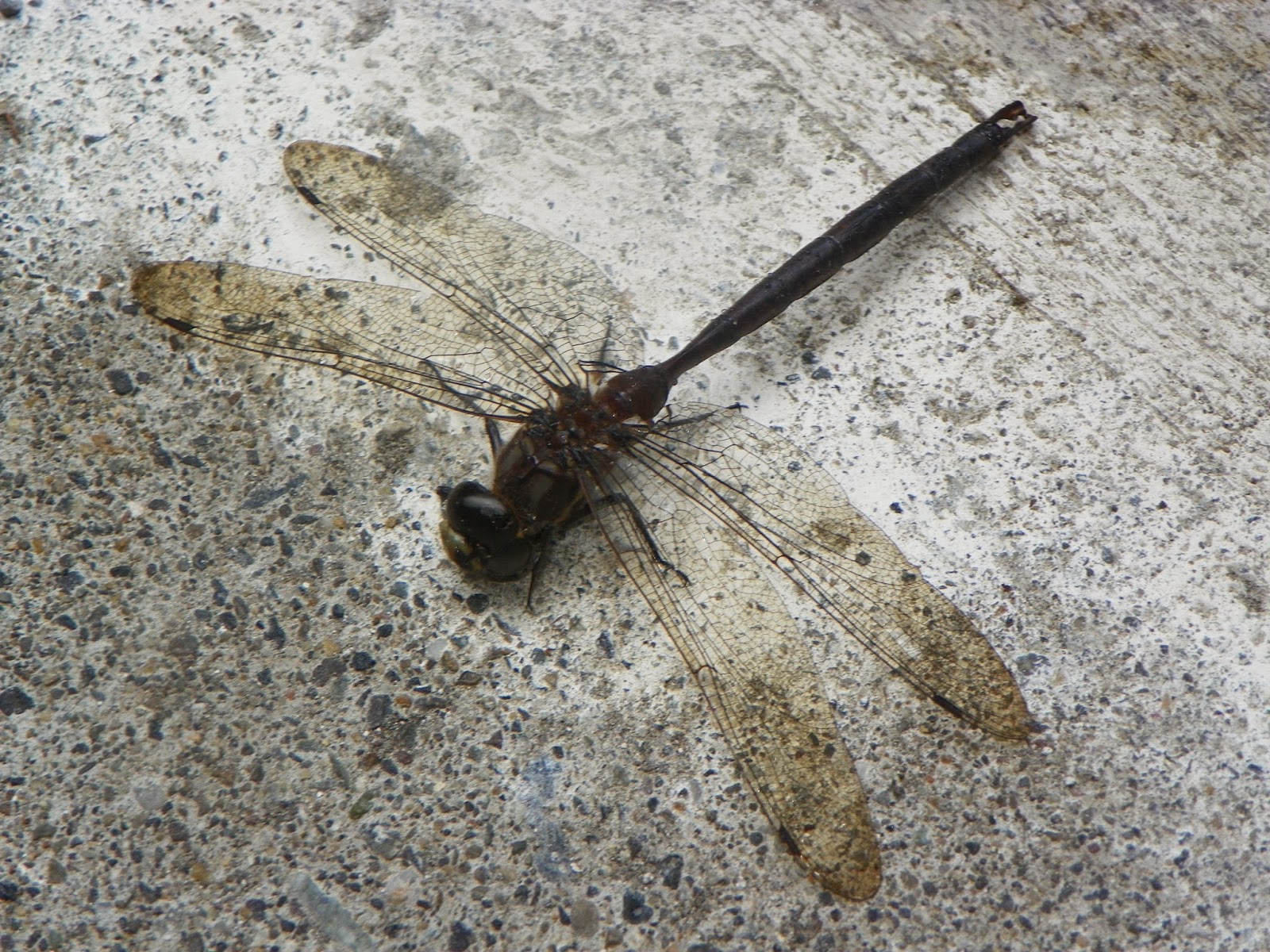
This past weekend, October 11th and 22th, our class went to a couple of great spots in the Pacific Northwest to get a glimpse at the huge variety of plants that have adapted to the their environment. Some of the places we stopped at were the Nisqually River Delta, Mima Mounds, and Mt. Rainier. The weather was really great for this time of year, and we even saw a tornado form, hit ground, and leave; it was amazing! Here are four species that I saw along the way, and how they have adapted to survive in their environment.
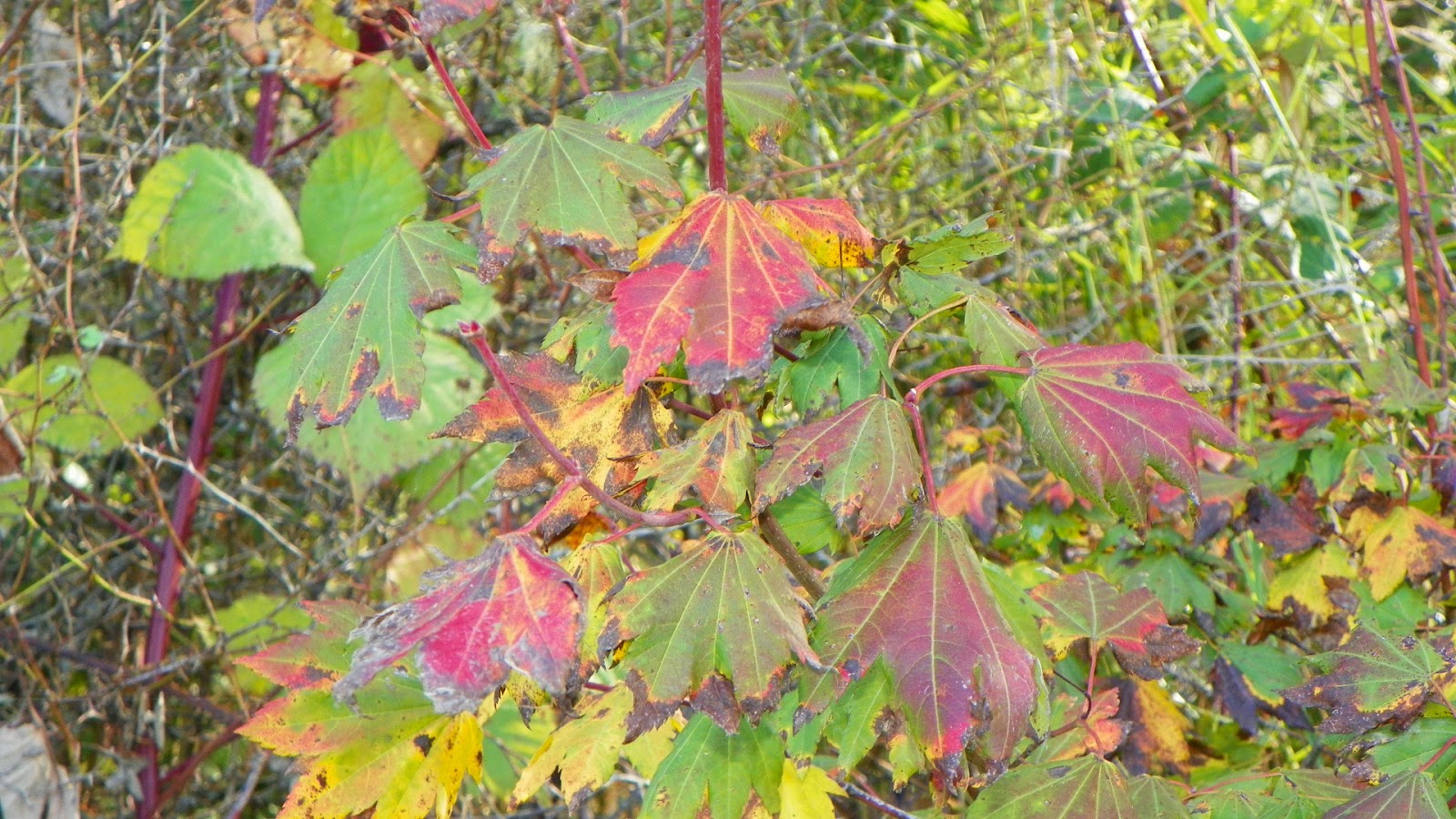
Vine Maple. This variety of maple grows fairly quickly and is often in the understory or forests. It is well adapted to branch out in search of sunlight and does well with a lot of sun to minimal sunlight. A characteristic that allows it to thrive in a variety of ecosystems is that it has a low requirement of water, and can grow in sandy soil, clay, and rocky soil. Vine maple has thin branches that often result in arched shapes. The vine system is often tangled and complicated.
Western Red Cedar. They have adapted to thrive in low to medium elevations. Western Red Cedars grow very tall and strong, which allows them to compete effectively for sunlight. They do best in wet climates with rich soil. Alluvial soil on seepage is ideal for this tree.
Garry Oak. Seen at Mima Mounds. These trees don't grow very tall, but they sprout up fairly quickly. In the Mima Mounds, there is a history of burning, but Garry Oak is fire-resistant at low enough temperatures.They are prone to be beat out by Douglas-Fir or other trees, but their ability to resist heat is a good adaptation. They grow well on dry, rocky slopes in low elevation, or on well drained soil.
Common Bearberry. This species is also found at Mima Mounds. It is well adapted to dry rocky slopes, sandy soil, dry forests, and can even live from low elevations to alpine tundra. They are extremely versatile, evergreen plant that can survive drought as well as very cold climates.
This is a thumbnail sketch looking down from a stopping point on our Mt. Rainier hike. The distant mountains are covered in trees, and have very little ice or snow left from last year. Closer to me, are scattered rocks that were most likely carried down by a glacier.
This is a thumbnail sketch from the Nisqually River Delta. The fresh water meets the ocean water creating an estuary, which makes a habitat for a variety of creatures and plants. In this particular area, many shore birds ,and ducks can be found including the Northern shoveler and American wigeon.

This sketch is of a Mt. Rainier glacier. The main features of a glacier is the accumulation zone, crevasses, moraines, and terminus. You may be able to see at the top right is the accumulation zone. This is where the snow is coming down from, adding to the glacier and melting as well. The crevasses appear from the melting ice that flows down the hill. Moraines are rocks that are left by glaciers; you can see in the sketch that in the bottom right corner there is a huge rock, and this was probably left by the glacier. The terminus is the end of a glacier, and at this lookout point on Mt. Rainier it seems that the terminus is high up, but scattered ice is trailing down a bit further. You can see that the ice has retreated quite a bit, and there is mostly barren land where it used to be creating a "U" shape. Due to climate change, this glacier has been getting smaller, and will continue to do so. Even so, Mt. Rainier is one of the most glaciated mountains in the United States. Thousands of years ago, this huge cavity would have been filled with glacial ice, and now it is exposed. Vegetation can begin to grow in the soil as long as it has the right characteristics to get there, compete, and flourish.
Here are some of the amazing creatures and other plants that were seen on our trip:
Cottonwood
Wooley Bear Caterpillar
Migrating Canada Geese
Tree Frog
Tree Frog
Great Blue Heron
Garter Snake
Stink Bug
Brown praying mantis
Green praying mantis
Common Harebell
Common Witch Hair
Stellar's Jay
A Black-tailed Doe
Only a few feet away!