Wednesday, October 15, 2014

Journal #3 Puget Sound Lowlands/ Mt. Rainier Plant Life


This past weekend, October 11th and 22th, our class went to a couple of great spots in the Pacific Northwest to get a glimpse at the huge variety of plants that have adapted to the their environment. Some of the places we stopped at were the Nisqually River Delta, Mima Mounds, and Mt. Rainier. The weather was really great for this time of year, and we even saw a tornado form, hit ground, and leave; it was amazing! Here are four species that I saw along the way, and how they have adapted to survive in their environment.
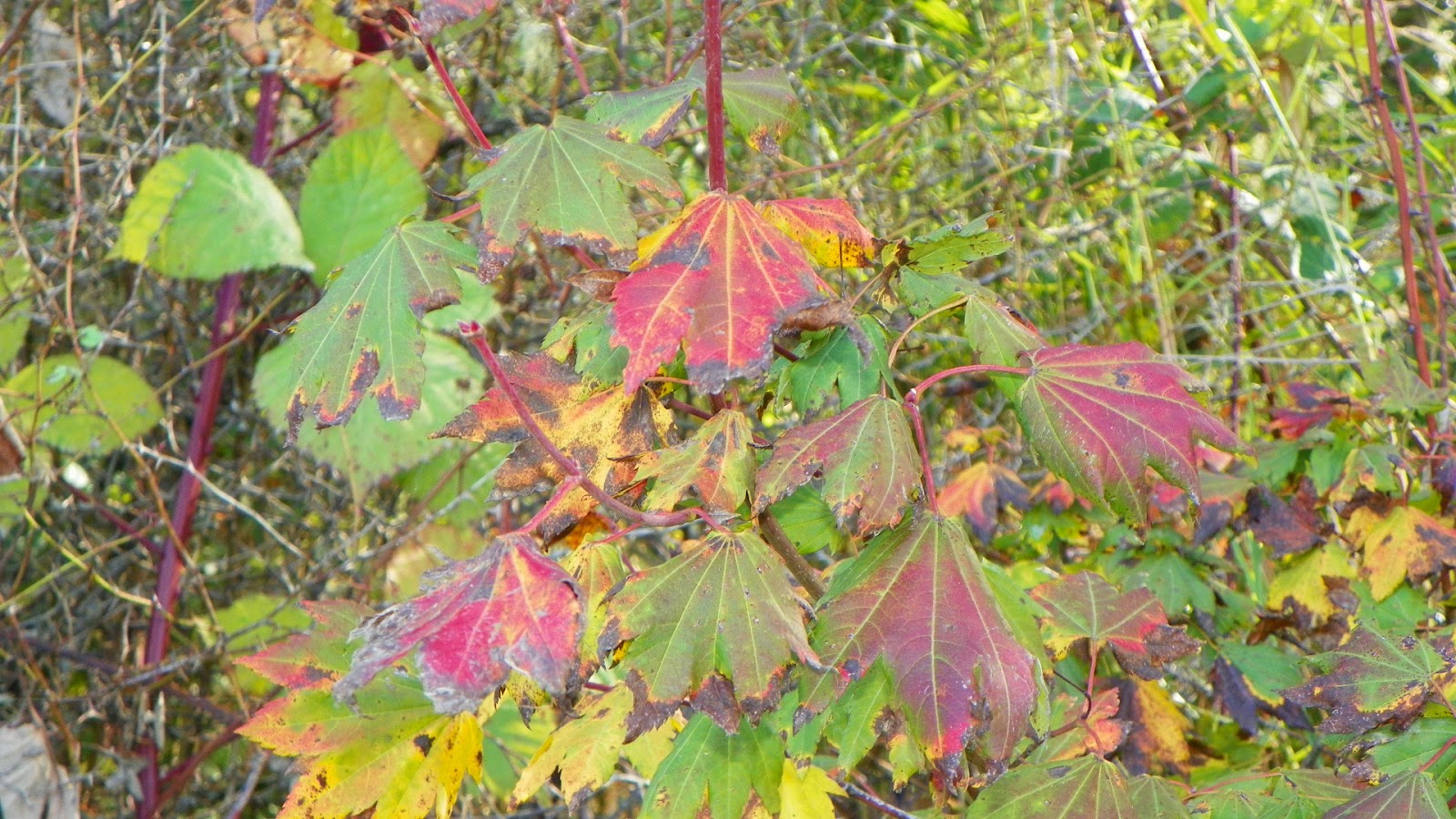
 
 
Vine Maple. This variety of maple grows fairly quickly and is often in the understory or forests. It is well adapted to branch out in search of sunlight and does well with a lot of sun to minimal sunlight. A characteristic that allows it to thrive in a variety of ecosystems is that it has a low requirement of water, and can grow in sandy soil, clay, and rocky soil. Vine maple has thin branches that often result in arched shapes. The vine system is often tangled and complicated.

 
Western Red  Cedar. They have adapted to thrive in low to medium elevations. Western Red Cedars grow very tall and strong, which allows them to compete effectively for sunlight. They do best in wet climates with rich soil. Alluvial soil on seepage is ideal for this tree.

 
Garry Oak. Seen at Mima Mounds. These trees don't grow very tall, but they sprout up fairly quickly. In the Mima Mounds, there is a history of burning, but Garry Oak is fire-resistant at low enough temperatures.They are prone to be beat out by Douglas-Fir or other trees, but their ability to resist heat is a good adaptation. They grow well on dry, rocky slopes in low elevation, or on well drained soil.

 
Common Bearberry. This species is also found at Mima Mounds. It is well adapted to dry rocky slopes, sandy soil, dry forests, and can even live from low elevations to alpine tundra. They are extremely versatile, evergreen plant that can survive drought as well as very cold climates.

 
This is a thumbnail sketch looking down from a stopping point on our Mt. Rainier hike. The distant mountains are covered in trees, and have very little ice or snow left from last year. Closer to me, are scattered rocks that were most likely carried down by a glacier.


This is a thumbnail sketch from the Nisqually River Delta. The fresh water meets the ocean water creating an estuary, which makes a habitat for a variety of creatures and plants. In this particular area, many shore birds ,and ducks can be found including the Northern shoveler and American wigeon.


This sketch is of a Mt. Rainier glacier. The main features of a glacier is the accumulation zone, crevasses, moraines, and terminus. You may be able to see at the top right is the accumulation zone. This is where the snow is coming down from, adding to the glacier and melting as well. The crevasses appear from the melting ice that flows down the hill. Moraines are rocks that are left by glaciers; you can see in the sketch that in the bottom right corner there is a huge rock, and this was probably left by the glacier. The terminus is the end of a glacier, and at this lookout point on Mt. Rainier it seems that the terminus is high up, but scattered ice is trailing down a bit further. You can see that the ice has retreated quite a bit, and there is mostly barren land where it used to be creating a "U" shape. Due to climate change, this glacier has been getting smaller, and will continue to do so. Even so, Mt. Rainier is one of the most glaciated mountains in the United States. Thousands of years ago, this huge cavity would have been filled with glacial ice, and now it is exposed. Vegetation can begin to grow in the soil as long as it has the right characteristics to get there, compete, and flourish.

Here are some of the amazing creatures and other plants that were seen on our trip:

Cottonwood

Wooley Bear Caterpillar

Migrating Canada Geese


Tree Frog

Tree Frog

Great Blue Heron

Garter Snake

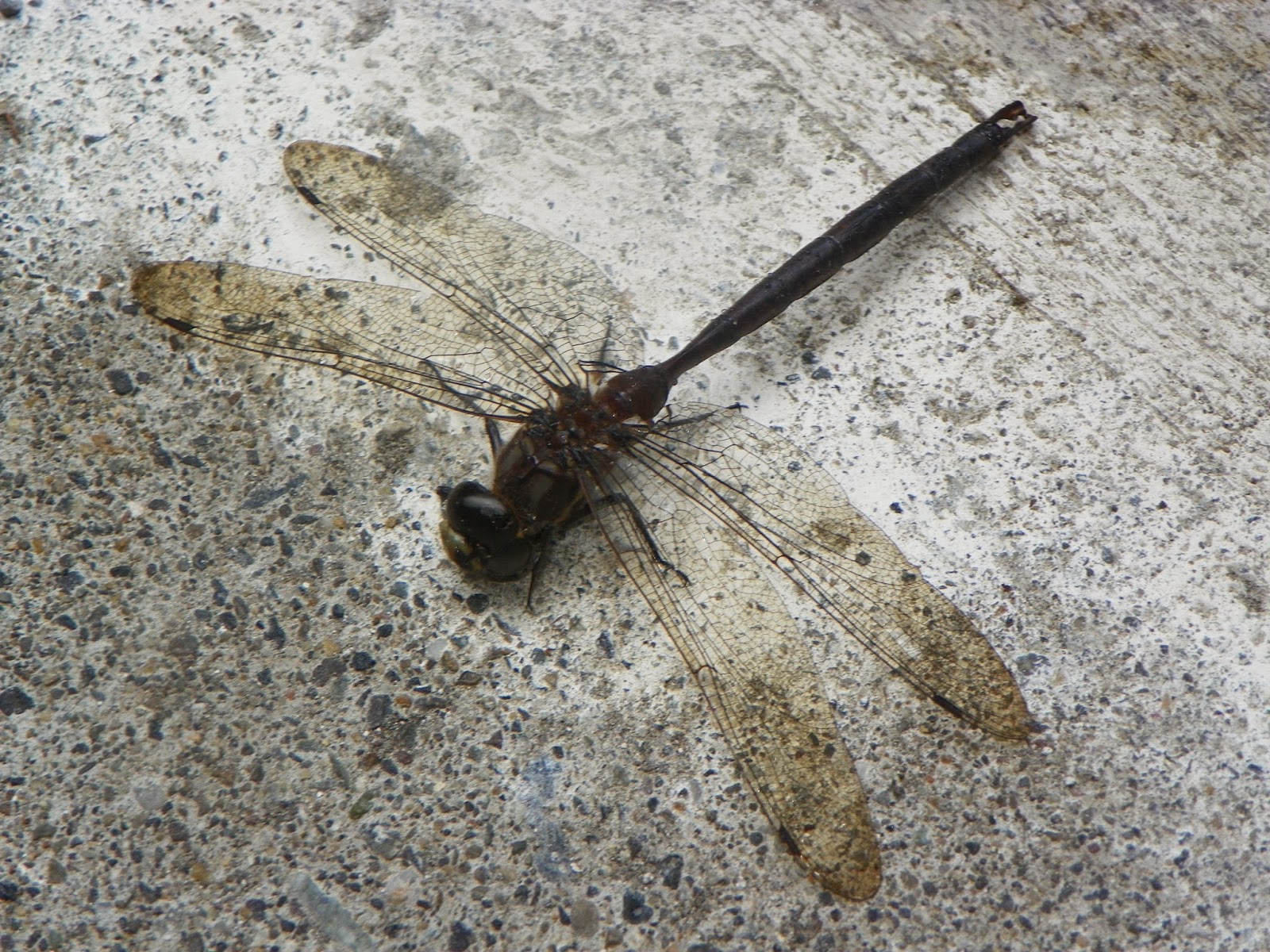


Stink Bug

Brown praying mantis

 Green praying mantis

Common Harebell

Common Witch Hair


Stellar's Jay

A Black-tailed Doe

Only a few feet away!

Thursday, October 9, 2014

Journal #2 October 8

Amanda Trimble
8 October 2014
Week 2 Observations

10 AM, cloudy cool day, 60 degrees F
        Today at the same place, Marker 21 between Marsh Island and Foster Island, things are just beginning to change. Most of the shrubs, grasses, and trees look very similar to last week although I did notice some change in color. I first noticed this in the lily pads; some of them are getting more yellow and have brown edges. The surrounding trees have fewer leaves, and there are a lot of yellow and red touches in the leaves. I have a feeling that next week will be a more dramatic change from today, and that there won't be many leaves left on some of the trees. But for now overall, I think the plants look the same, especially the ones that have not shed their leaves.
         There is quite a bit of tall grass surrounding the edges of island, and a few varieties it seems. Some with thicker blades, and some with very skinny blades. There is a tree right by marker 21 that has small green leaves that are shaped kind of like a rounded triangle, with long oval catkins of some kind on many of the ends. There is so much going on in terms of different plants everywhere that it is hard to focus on what is in front of me, since I don't know the names of anything, but I am starting to recognize the difference between the some of the plants.
A change from last week is that the Arboretum maintenance crew is working on a few projects. First, I saw them trimming back the plants that had grown onto the paths and bridges. They were also pruning a lot of the trees in the arboretum.
        The sketches for today are from a few larger bushes and trees on Foster Island. Two of them look similar from far away, but after drawing them, I can definitely see that they are different even though they both have red berries. I also sketched some ducks because they came within a couple yards of my observation spot, and so I got to look at them for a really long time.
       Overall, it was a beautiful day to walk through all of the trees in the Arboretum- so pretty! The weather was also very similar to last week, and I saw a plethora of ducks as well.


Sunday, September 28, 2014

Journal # 1 September 28

September 28, 2014
Washington Park Arboretum
Sunday 1:15 pm
61 degrees F

     Today I did my first observations at the Washington Park Arboretum. It was a very mild day; no rain, no sunshine, just cool and cloudy. A lot of people were out on their boats on Lake Washington, fishing, exploring, or taking a walk. I began by walking through the trails of Marsh Island. Not having been there before, I discovered that Marsh Island is connected to Foster Island. There were a lot of great places to stop and record my surroundings, but I decided to keep exploring other parts of the trails. Once I came to Foster Island, it was pretty muddy, so I back tracked to find a final destination. My final point is marker 21, a bridge between the two islands.
        My immediate surroundings are Lake Washington facing one way, and trees and plants facing the opposite direction. In the lake, are numerous lily pads floating atop the water. I was actually surprised to see so many of them scattered here and all around Lake Washington. All of the little plants and shrubs are unknown to me, but I'm sure I will start to learn the names of them eventually.
        Looking farther out, there is an endless amount of lake, and an endless amount of greenery. Being on the bridge, I can either walk towards Marsh or Foster Island Trails. I can hear sporadic chirping and quacks, as well as airplanes flying over head. It smells fresh and woody, and the atmosphere is just really soothing. Along my walk I saw a few different birds. Earlier on in the trail there was a huge flock of geese and farther along I saw a variety of different ducks. I know that one of them was a male mallard, but I don't know about the other two kinds.
        As a kid, I didn't go hiking on trails very much, but the few times I did were pretty memorable. When I was in elementary school, my dad made me go backpacking with him, my older brother, and some family friends. I just remember the backpack being extremely heavy, and the walk seeming endless. Plus they were getting mad at me for not being able to keep up. Another time that I was out in the wilderness, was going bird hunting with my dad. This was definitely not as bad, I really enjoyed being out in the quiet, and spending time with him. I remember that it was always in very dry climates in Yakima or Arizona, and we had to walk for hours. One time I got really freaked out because there was a decomposing cow in the middle of a field in Yakima.
       My most recent hiking experience was in the Columbia River Gorge. I live a short car ride from all the trails in Portland, but I never had gone before this past summer. I really enjoyed looking at all the smaller waterfalls. It was very peaceful, and there weren't many people around, except when you get to Multnomah Falls, which is so big and beautiful that everyone wants to get a picture on the bridge. In retrospect, I really enjoy the type of nature that has some body of water close to it; it seems much more alive and lush. Hiking in Yakima was not bad, but it was very dry, and so it seemed like everything was brown. Living in Vancouver and now Seattle, I really appreciate all the green surroundings, and I think that the place I have chosen in the Washington Park Arboretum is perfect because it is very abundant in plants and birds, and is surrounded by a beautiful lake.